
Schools Need More

A school-community publication on institutional decisions and everyday work, with sourced examples, staff perspectives and practical resources.

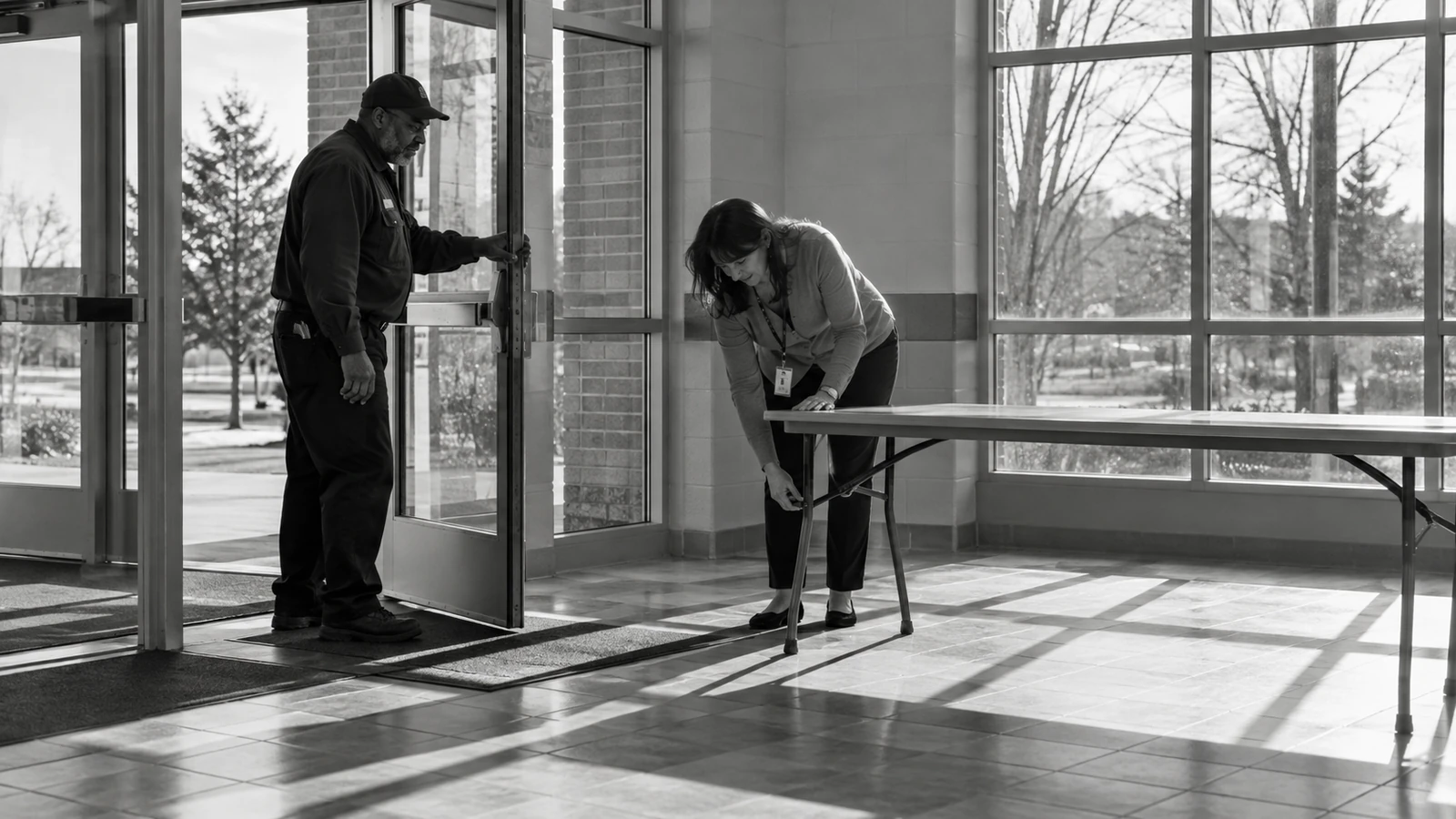
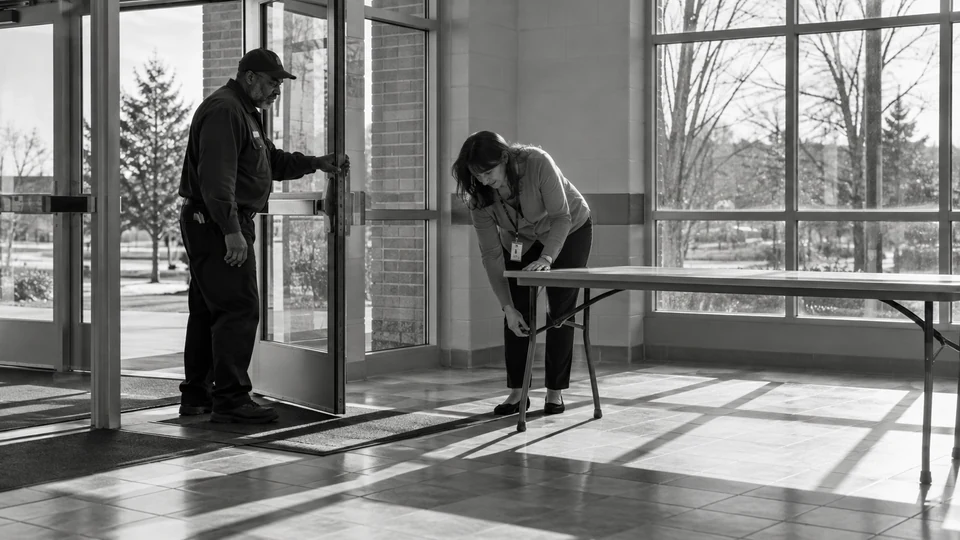
A custodian holds an entrance door while an administrator adjusts a folding table leg.

A school is more than its public announcements.

Schools Need More is being developed to look behind announcements at staff work, competing needs and local constraints. Part of Education Needs More, it offers institutional features and communication examples that readers can examine without treating another school’s choices as their own instructions. Public reading is free and account-free.

Who This Is For:

School leaders, district teams, staff and community members who want a clearer view of how school decisions work in practice.

Look behind the announcement.

Follow the work before an event, the questions a notice must answer and the continuing responsibility behind a library resource.

  1. 1. Start with a school question.

    “The Work Before the Doors Open” looks behind a calendar entry at the room, entrance and people answering questions. A school’s staffing, buildings and family circumstances shape the choices being examined.

    A custodian holds an entrance door while an administrator adjusts a folding table leg.

    Institutional feature

    The Work Before the Doors Open

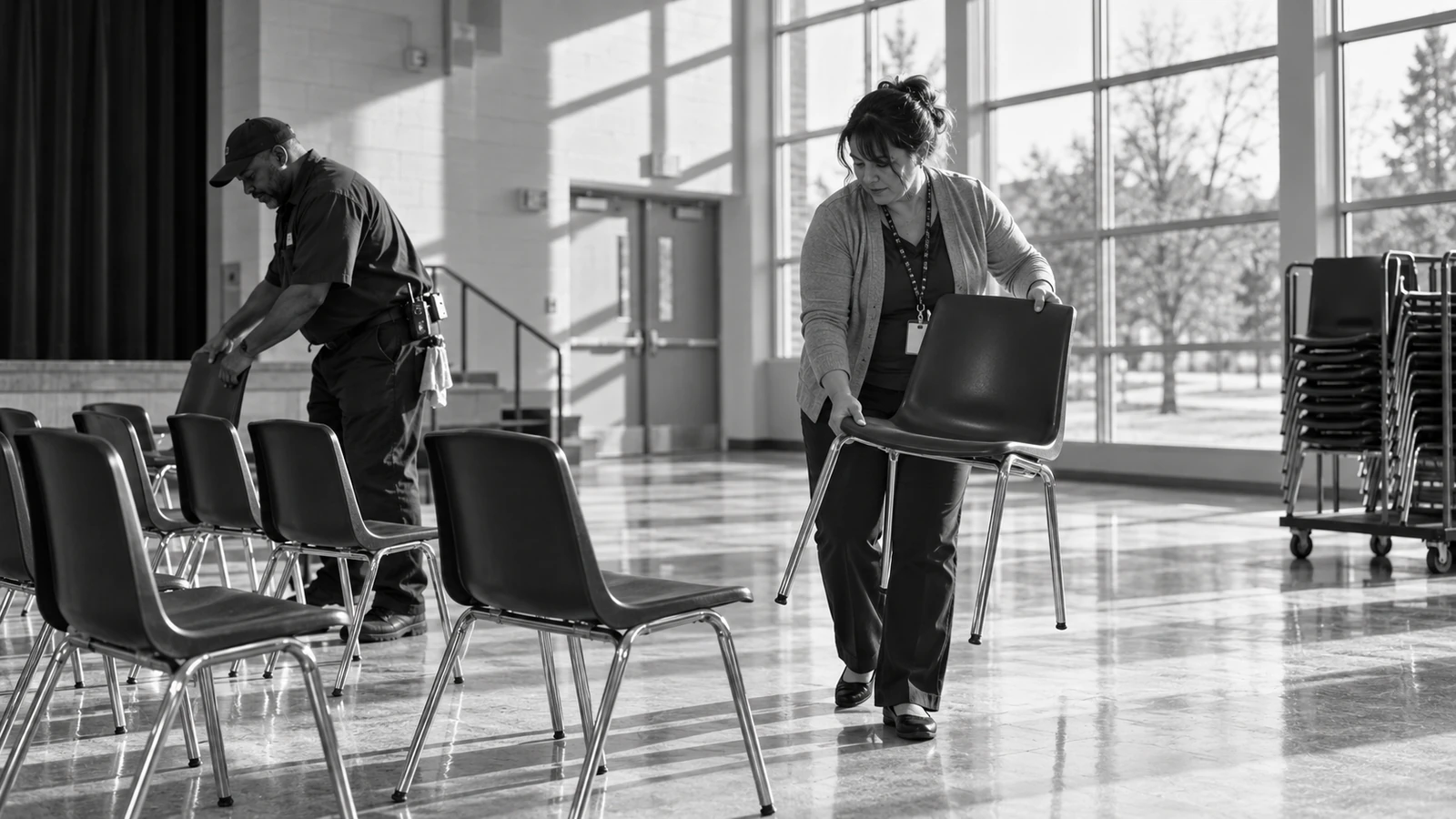
    A school event appears on a calendar as a single line. Before the doors open, someone has arranged the room, checked the entrance and worked out who will answer a family arriving with a question. The announcement is the visible end of several decisions.

  2. 2. Read the decision through its communication.

    “A Notice That Begins With the Reader’s Question” uses a fictional project showcase. Its optional outline checks purpose, confirmed time and place, arrival information and a responsible contact.

    No actual event details are supplied. The school retains authority over arrangements, access, policy and commitments.

    Communication example

    A Notice That Begins With the Reader’s Question

    A message can begin with the history of a project when its reader first needs to know whether they are invited. A feature about school communication can compare those two starting points without treating a shorter notice as automatically better.

  3. 3. Bring the work into view.

    “What Does It Take to Keep a Library Corner Open?” considers space, staff time and continuing access alongside the books. An optional brief identifies the issue, experience, people and question ahead.

    A story suggestion needs no private school records. Publication is not policy, legal or grant authority, institutional endorsement or adoption of Runstr.

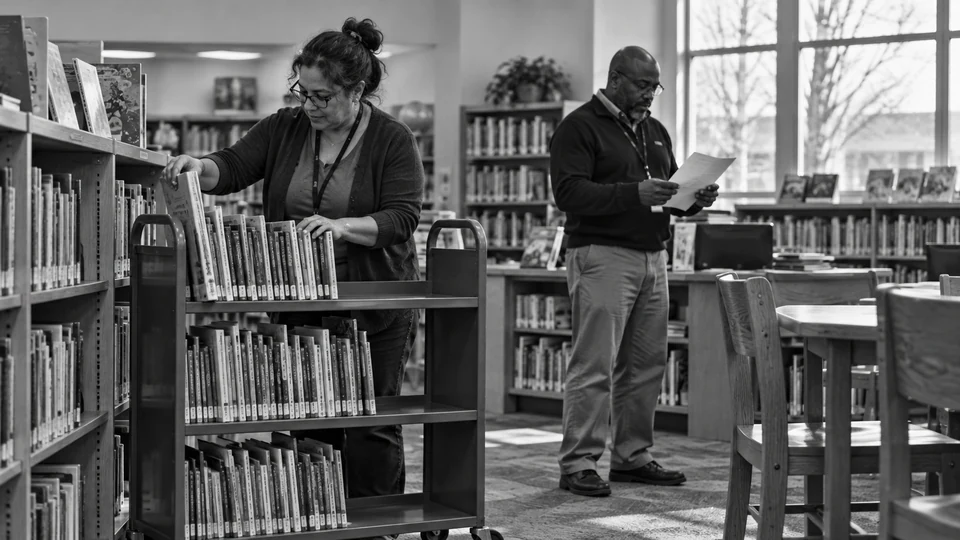
    Staff prepare books and a rolling cart in a school library.

    Resources & everyday work

    What Does It Take to Keep a Library Corner Open?

    The books are the visible part. Access also involves the room, the opening times, the person responsible for the space and what happens when that person is needed elsewhere. A resource story becomes more useful when it asks about continuing work as well as the initial purchase.

The Thinking Behind It:

How readers understand school decisions through research use, local resource constraints, interpretable numbers and two-way community communication. The review considers when an original guide or a conversation with responsible staff may be enough.

Large-district survey findings, selected historical district accounts and institutional guidance have different limits. Reported usefulness does not establish good research use, and another school's example does not authorize a local decision. None evaluates Schools Need More.

Explore the Research

Security and Safety:

Review the privacy, access and reporting arrangements for Schools Need More before sharing sensitive information. Our shared program explains the requirements and evidence expected of each service.

Read EAG’s Security Program

What Happens Next:

Relaunching in November 2026

Schools Need More is in development. The published timing is a plan; this Discover page explains the experience rather than providing the product itself.

Loading reactions…